


Serious crises in oil-producing countries are pushing markets to finally price in geopolitical risk. As of Jan. 21, West Texas Intermediate crude is over $60 per barrel, reflecting only the faintest acknowledgement of unrest in Iran despite weeks of escalating protests, estimates of 3,000 to 20,000 people dead, and a complete internet blackout.
Recognizing geopolitical risk cannot come soon enough.
Amid continued violence and uncertainty in Iran, Russia’s ongoing war in Ukraine, and Russia’s export of crude oil to China, acknowledgement of market risk is long overdue. It should refocus investment where the rule of law, freedom, and transparency prevail: right here at home.
The United States must continue to invest and maintain U.S. oil and gas production to improve energy security for the United States and its allies. Complacency risks American energy dominance, economic and national security, and geopolitical leverage.
For those who have been paying attention to geopolitics–a focus of the American Energy Institute and PetroNerds—these global realities are unsurprising.
The stock market and the oil market have largely ignored geopolitical risk over the past year. An extreme lack of attention to geopolitics, plus an abundant crude supply, much of which is coming from the sanctioned nations of Russia, Iran, and Venezuela, have resulted in downside bets on oil prices.
Global players shaping risk in oil markets are intertwined and working with each other, supplying weapons and trading illicit and sanctioned crude, moved by Russia’s shadow fleet, helping to distort market signals and transparency.
From Russia’s war in Ukraine to escalating tensions in Asia, and ongoing uncertainty in Iran and Venezuela—there is no shortage of risk.
This month alone, the United States captured Venezuelan dictator Nicolas Maduro, a man and nation with significant ties to China and Russia. The same weekend, North Korea launched test missiles and China ratcheted up drills around Taiwan. Iran, a regime that has long fomented regional chaos with its oil money, began using extreme force to quell nationwide protests, instituting internet blackouts to prevent outsiders from seeing the true carnage on the ground.
Each of these events should have added risk to the market and led to rising oil prices, especially given that Russia, Iran, and Venezuela are major oil producing countries, producing roughly 15 mbd (million barrels per day) combined.
However, the U.S.is the largest oil producer in the world, producing nearly 14 mbd of crude oil.
A modest rise in oil prices should be welcomed in the U.S. as it would promote stability and investment in U.S. shale. Investing in U.S. shale provides economic growth, jobs, export revenue, and American energy dominance. It also reinforces energy security at home and abroad, supplanting unstable foreign production from nations like Iran.
Moreover, the U.S. consumer can handle modestly higher oil prices, which would support both the U.S. oil patch and the broader American economy, given that the U.S. is the largest crude oil producer and exporter in the world.
As the global leader in oil, natural gas production and oil exports—producing as much oil as Russia and Iran combined—the U.S. has an obligation to continue to lead in energy.
Geopolitical instability and inhumane and illicit crude oil coming from sanctioned nations makes U.S. oil production and continued investment in U.S. oil that much more critical.
U.S. crude oil production is produced under the rule of law with transparent production and transportation data. In contrast, Russia and Iran conceal how much oil they produce and sell their crude oil at extreme discounts to China.
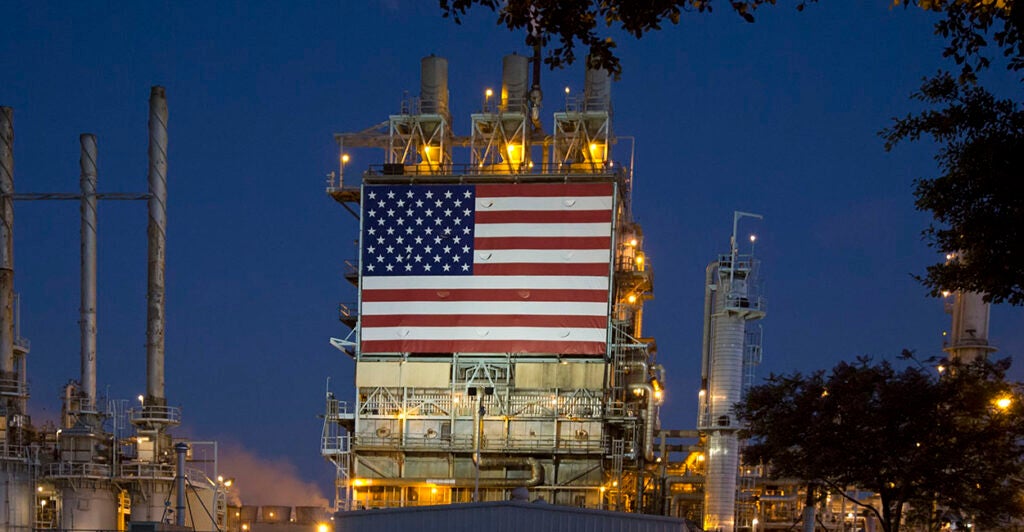
Last weekend, I watched the Newcastle refinery in Wyoming transform local Rockies crude into products that power lives across the country, a reminder that energy is the foundation of modern life, economic stability, and national security. Continued global unrest should be a clarion call to the energy market and investors to focus on production and investment in the U.S., where the rule of law, free markets, and efficiencies in the U.S. shale patch drive not only returns and profitability but U.S. energy security and global energy security.
We publish a variety of perspectives. Nothing written here is to be construed as representing the views of The Daily Signal.