


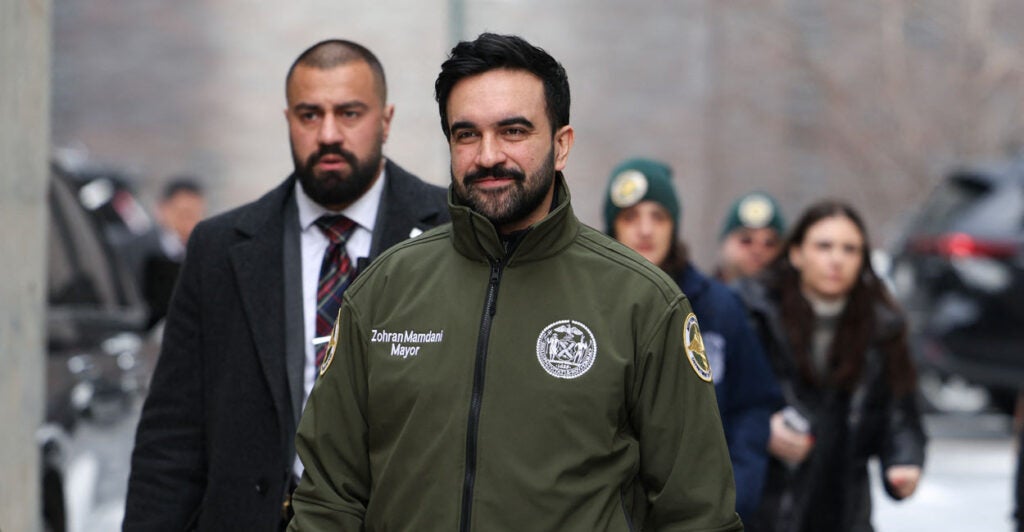
Zohran Mamdani’s policy and funding proposals could precipitate an economic and political crisis in New York City reminiscent of the movements that led to Communist China, the Soviet Union, or Socialist Venezuela.
To finance this red vision, New York’s mayor proposes an additional 2% income tax on New York City’s noncorporate businesses and residents making over $1 million annually.
He claims that this revenue will address residents’ affordability concerns by allowing the government to provide discounted or free services. These socialist policies range from rent freezes, affordable housing, city-owned grocery stores, free buses, no-cost child care, and mandating a $30 minimum wage.
For a city that consistently issues municipal bonds to attempt to escape its debt, piling on more anti-growth taxes will only exacerbate these problems.
There is a catch to Mamdani’s policies that his campaign ads never mentioned: The city requires state approval to raise its local income tax rate.
Mamdani has campaigned on promises he can’t keep. Neither the mayor nor City Hall can “flip a switch” because an income tax hike is subject to Albany’s budget process.
Even assuming his plan is hypothetically supported, it would impose an additional 2% penalty tax on millionaires’ incomes—which includes small businesses that file individual income taxes. For example, someone making $1 million will pay the top local marginal tax rate of 3.9% on top of an additional $20,000 in penalty tax.
Notably, New Yorkers already pay exorbitant taxes at all three levels of government, making it the most burdensome in the country. Federal income taxes range from 10% to 37%, New York state income taxes range from 4% to 10.9%, and New York local income taxes range from 3.1% to 3.9%.
While the lowest earners pay 0% in taxes by using standard deductions and exemptions, the highest earners can see combined income tax burdens up to 52%.
Mamdani claims that “new millionaires are minted every year,” as if that justifies levying additional taxes on New Yorkers. The mayor ignores the innumerable benefits that high-income individuals, often entrepreneurs and business owners, have on society and the economy.
These entrepreneurs and innovators are significant drivers of investment and broad-based economic growth. Their businesses contribute to employment, and their wealth contributes millions of dollars in tax revenue for local, state, and federal governments.
The primary ethical justification thrown out by Mamdani for raising taxes is that the “rich don’t pay their fair share.” But according to IRS filings, the top 1% of earners pay 40.4% of all income taxes, and the top 10% pay a 72% share.
According to the Citizens Budget Commission, New York millionaires are less than 1% of resident filers, yet they already pay about 40% of New York City’s and 44% of New York state’s personal income tax.
When the city relies this much on heavily taxing so very few households, changes in their income or residency have outsized budget effects. There is no doubt that the wealthy pay their fair share of taxes.
If high earners relocate to states or suburbs with lower rates, they take with them their purchasing power, taxable income, and businesses, which create jobs.
By imposing disproportional income taxes and ignoring the realities of modern hybrid work, Mamdani will imperil municipal budgets as both capital and the wealthy mobile population flee from socialist policies. Consequently, this will undermine funding for the very social services Mamdani has promised.
New York doesn’t have to adopt Florida’s budgeting acumen overnight, but it does need to keep the people and businesses who pay the bills. Implementing a new 2% penalty tax on high earners and their businesses, on top of the current marginal rates, is a gamble with the city’s budget and economic ecosystem that will detrimentally impact residents.