


The White House has released a new National Security Strategy whose central purpose is unambiguous: to ensure the United States remains the preeminent global power. At its core is a new and pragmatic China strategy.
The document opens with a blunt indictment of the past three decades of American policy, especially on China. Successive administrations—Republican and Democratic alike—embraced the delusion that flooding China with capital, technology, and market access would liberalize the Chinese Communist Party and peacefully integrate it into an America-led rules-based world order.
Instead, we financed and armed our most dangerous rival. The result is a near-peer competitor that now menaces American security, prosperity, and the free world itself.
The new National Security Strategy discards that fantasy. It is grounded in a cold-eyed recognition that the United States must compete—relentlessly and across various regions—while buying the time required to rebuild the industrial, technological, and military foundations that previous generations allowed to atrophy.
In the Western Hemisphere, the administration is reasserting the Monroe Doctrine. China’s creeping penetration of Latin America—$2.5 billion into Panama alone, second-place usage of the canal we built, Chinese leader Xi Jinping’s pledge to wire 33 regional nations into Beijing’s orbit—has been met with swift counteraction by the Trump administration.
Earlier this year, the Trump administration successfully urged Panama to withdraw from a China-funded infrastructure initiative. Soon after, Hong Kong’s CK Hutchison announced the sale of its controlling stake in two Panama ports to a group of investors led by American investment firm BlackRock.
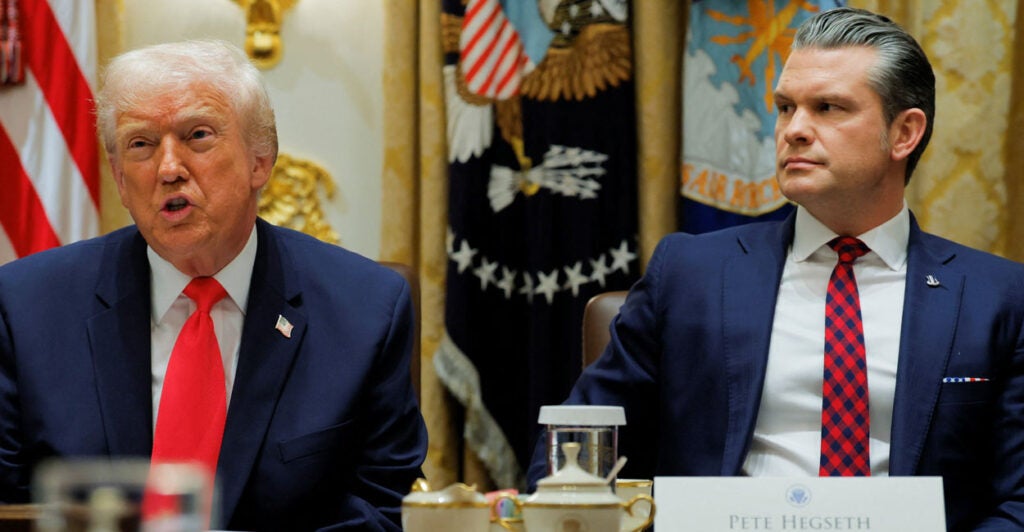
In April, Secretary of War Pete Hegseth reiterated the commitment to counter “malign Chinese influence” in the Western Hemisphere.
The new security strategy declares, without apology, that the United States will remain the dominant power in the Western Hemisphere and that non-hemispheric actors—China foremost among them—will be denied military footholds and strategic resources in America’s backyard.
The document delves more deeply into America’s China policy in its section on Asia. The Trump administration recognizes that the Indo-Pacific region accounts for nearly half the world’s gross domestic product by purchasing-power parity. Free and open Indo-Pacific is vital to our national interest.
On the economic front, the administration seeks to a balanced trade relationship with China based on “reciprocity and fairness” to regain American economic independence.
The goal is clear: “If America remains on a growth path—and can sustain that while maintaining a genuinely mutually advantageous economic relationship with Beijing—we should be headed from our present $30 trillion economy in 2025 to $40 trillion in the 2030s, putting our country in an enviable position to maintain our status as the world’s leading economy.”
Some China hawks recoil at any language of “mutually advantageous” relations, hearing in it the echo of past naïveté. They are not wrong to be skeptical. Beijing’s definition of “win-win” has always meant China wins twice.
Yet, total decoupling immediately is not feasible. The United States requires time to rebuild its manufacturing capabilities and secure its supply chains. However, a measured tone does not suggest that the administration will shy away from robust competition with China or neglect the essential interests of the United States and its allies.
For instance, the National Security Strategy clearly commits to cooperating with allies and strengthening military capacity that can counter aggression in the First Island Chain near China, especially to protect Taiwan due to its strategic location in the South China Sea.
This area is critically important for the U.S. and its allies, with one-third of global shipping passing through it annually. The Trump administration vows to establish “strong deterrence necessary to keep these shipping lanes open and free from arbitrary closures by any single nation.”
Critics of President Donald Trump have sought to paint him as someone willing to compromise Taiwan’s security for trade concessions with China. However, the security strategy directly counters these speculations, offering much-needed reassurance to both Taiwan and Japan.
This clarification is particularly welcome given the increasing pressure from China on Japanese Prime Minister Sanae Takaichi, who has stated that Japan would mobilize its defense forces in the event of a Chinese invasion of Taiwan.
Xi, who regards the reunification as a “core interest,” is bound to feel disappointed by the strategy’s approach, as it clearly indicates that the Trump administration firmly rejects any unilateral changes to the status quo in the Taiwan Strait.
Moreover, the U.S. actively encourages allies like Japan to enhance their defense expenditures and collaborate with the U.S. to maintain the South China Sea as a free and open area.
The Trump administration has clearly learned from past policy mistakes. The National Security Strategy rejects the platitudes of the past, accepting the hard truth that great-power competition has returned—and that the United States intends to win it by bolstering its economic, technological, and military leadership, while resolutely defending its interests, security, and prosperity against China’s aggressive actions, particularly the Western Hemisphere and the Indo-Pacific.
If executed with discipline and sustained by the American people, America will remain a leading global power for many years to come.
We publish a variety of perspectives. Nothing written here is to be construed as representing the views of The Daily Signal.