


With the “temporary” Obamacare subsidies set to expire at the end of the year, Republicans in Congress have floated several plans to make health care more affordable.
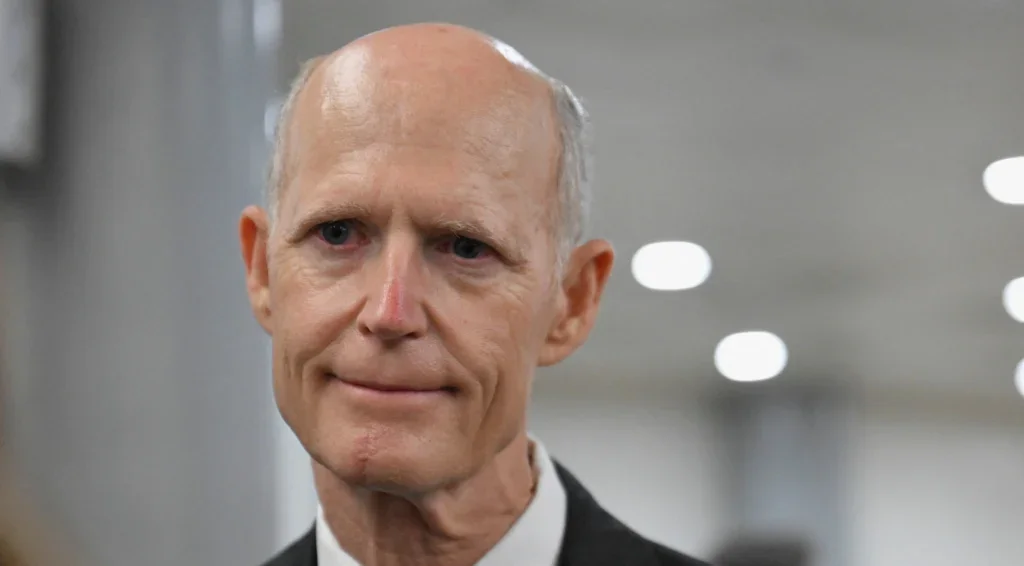
Sen. Rick Scott, R-Fla., joined “The Tony Kinnett Cast” on Thursday to discuss his idea to tamp down on health care costs while helping families with their medical bills. The legislation would expand health savings accounts funded by the government.
Scott said that Americans generally want everyone to get health care and have a safety net for those who need it. The senator said his personal experience helped him understand what it’s like when a family has uncertainty about health care coverage.
“Why it’s important to me is I grew up in a family that struggled,” he said. “My mom struggled to put food on the table. When my brother had a significant disease, she couldn’t find a doctor or hospital to take care of him in her hometown. We had to go four hours away to a charity hospital. So this hits home to me, right?”
But Scott said the Affordable Care Act, passed in 2010, has been an “absolute disaster” that turned out to be based on “complete lies.”
“Oh, you’re going to keep your doctor. That was a complete lie. Oh, you get to keep your plan. Lie,” he said. “Oh, you’re going to save $2,500 per family. Lie. And so, what’s frustrating is it’s been sold on a lie.”
What’s happened since the passage of Obamacare is that “costs have skyrocketed,” Scott said. He explained that a high-deductible plan has risen in price from around $3,000 to “$6,500, $10,000, $15,000.”
The Florida senator said his plan, which was co-sponsored by Rep. August Pfluger, R-Texas, is aimed at addressing the “root problem” behind health care costs.
He compared his plan to food stamps, where people are given money to buy food themselves rather than giving grocery stores money directly and having them decide what groceries a family needs.
“In health care, we do the opposite. We give you an insurance card, but we say we’re going to let government decide what insurance, what health care you get or let the insurance company,” he said, noting that his plan was aimed at giving money to individuals who would have the ability to choose and pay for their own health care.
Kinnett asked Scott about the Supplemental Nutrition Assistance Program and how his health care law would prevent the kind of fraud that has become “rampant” in that system.
“No. 1 is they have to pay a portion of [their] health insurance,” Scott said, which was a feature of the original Obamacare subsidies.
“No. 2 is you’ve got to verify who people are, and you got to verify their dependents,” he said, noting that he aggressively did this when he was the governor of Florida, “but the federal government, they’re OK with the fraud so far.”
Scott said the current COVID-19-era subsidies Democrats are trying to extend are going to some people “making $250,000 a year that could be worth a million dollars” and that this “ought to stop.”
Then we need to “go back to the old the original Obamacare, which had requirements that you had to pay a portion of your premiums,” Scott said.
The Senate voted on an alternative Republican health care plan Thursday afternoon with a count of 51 to 48 in favor, so it failed to get the 60 votes needed to pass. Democrats unanimously voted against it. Sen. Rand Paul, R-Ky., voted against it and Sen. Steve Daines, R-Mont., didn’t vote. A Democrat plan to extend the Obamacare subsidies was also rejected in the Senate.
This piece was corrected to include that the Senate rejected an alternative Republican health care plan and a Democrat plan.