
The Indian media is raising concern about President-elect Donald Trump’s phone conversation with Pakistani Prime Minister Nawaz Sharif and what it might mean for his policies toward the subcontinent.
While on the phone, Trump reportedly told the Pakistani prime minister, “I am ready and willing to play any role that you want me to play to address and find solutions to the outstanding problems.”
These comments, however, should merely be seen as friendly banter that could have been made to almost any foreign leader.
It is not surprising that Pakistani leaders would take advantage of a polite and warm exchange to push their agenda of bringing international attention to the Indo-Pakistani conflict in Kashmir—a long-disputed territory.
Pakistan, which has lost three wars with India—two of them over the status of Kashmir—has sought to use international mediation to wrest Kashmir from India.
It is highly doubtful that the Trump administration will consider inserting itself into the volatile Indo-Pakistani dispute, especially when Trump has signaled his interest in prioritizing deepening ties with India.
TRENDING ARTICLES

Indeed, if there is any useful role the U.S. can play in tamping down tensions between the two nuclear-armed rivals, it is to press Pakistan to crack down on anti-India militants that operate freely in Pakistani territory.
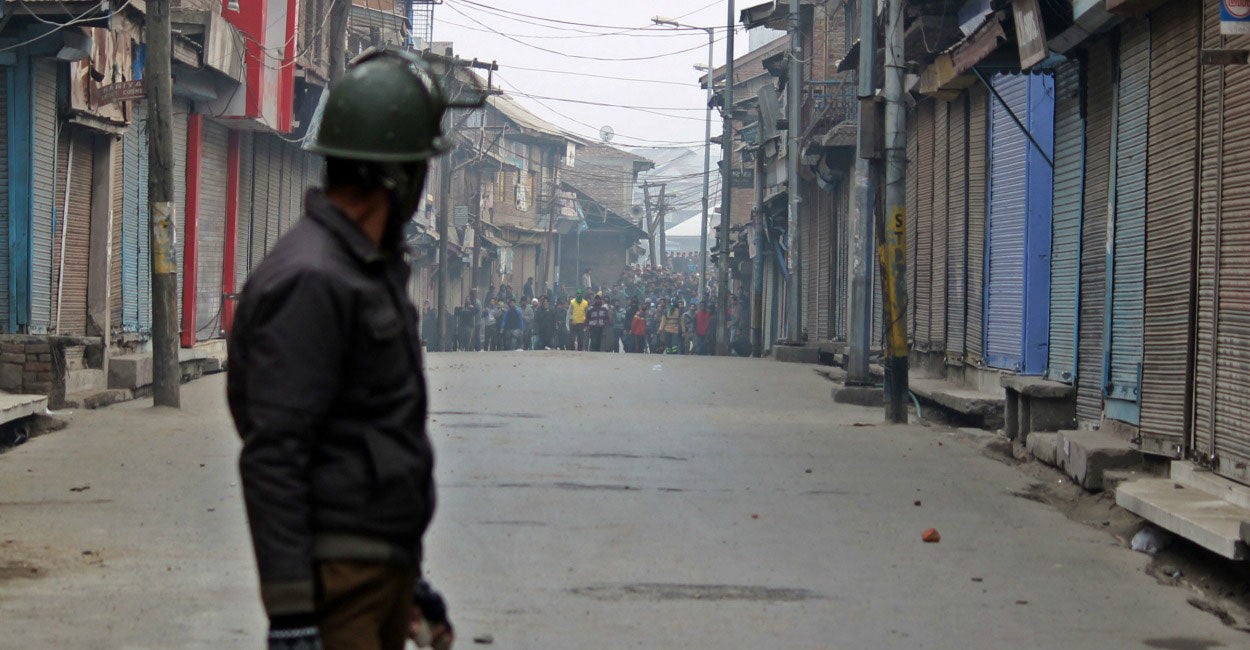
The Indian subcontinent was plunged into crisis on Sept. 18 when Pakistan-based militants attacked an Indian military base in the Kashmir town of Uri, killing 18 Indian soldiers.
Ten days later in response, New Delhi launched surgical strikes across the Line of Control dividing Kashmir in order to neutralize militant bases on Pakistani territory and prevent future attacks against India.
The U.S. avoided directly criticizing India for these operations and instead simply called on both sides to avoid escalation and continue discussions aimed at defusing tensions.
Shortly before news broke about the Indian strikes, U.S. National Security Adviser Susan Rice called on Pakistan “to take effective action to combat and delegitimize United Nations-designated terrorist individuals and entities, including Lashkar-e-Taiba, Jaish-e-Mohammad, and their affiliates.”
The U.S. handling of India-Pakistan relations is a delicate matter. It is important for U.S. officials to avoid the mediation trap and any illusion that the U.S. itself can resolve this nearly 70-year-old dispute.
While the U.S. in the past has been helpful in defusing crises and preventing all-out wars between the nuclear-armed nations, any hint of the U.S. trying to mediate a political solution to Kashmir only throws fuel on the fire and encourages more violence.
It is likely that the Sept. 18 attack on the Indian military base was aimed at bringing international attention to the issue around the same time that the 2016 U.N. General Assembly was getting underway.
The Uri attack was the second major Pakistani provocation in the space of nine months. In early January, a Pakistan-based militant group, the Jaish-e-Mohammad, attacked an Indian air base at Pathankot.
The Uri attack demonstrates Pakistan’s willingness to up the ante in order to draw international attention to Kashmir at a time when civil protests had been wracking the region.
The U.S. must demonstrate that such Pakistani behavior is unacceptable and will have consequences.
Congress has already sanctioned Pakistan for its continued support of terrorist groups that attack in Afghanistan, and it must now do the same for Pakistan’s failure to crack down on those attacking India.

Read the first chapter of The Woketopus right now for FREE
Today, even with President Trump’s victory, leftist elites have their tentacles in every aspect of our government.
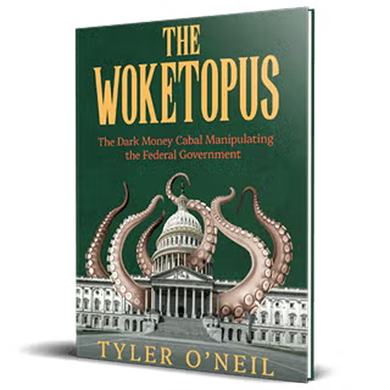
The Daily Signal’s own Tyler O’Neil exposes this leftist cabal in his new book, The Woketopus: The Dark Money Cabal Manipulating the Federal Government.
In this book, O’Neil reveals how the Left’s NGO apparatus pursues its woke agenda, maneuvering like an octopus by circumventing Congress and entrenching its interests in the federal government.
You can read the first chapter of this new book for FREE in this eBook, The Woketopus: Chapter One using the secure link below.



The Daily Signal depends on the support of readers like you.
RELATED ARTICLES




Don’t miss the

Don’t miss the signal