
China Has a Serious Demographic Problem and Its New Two Child Policy Will Not Fix It

China’s recent decision to abandon the one-child policy in favor of a two-child policy, while welcome, is neither a fundamental policy shift nor a long-term solution to China’s economic dilemma.
At root, the one-child policy was merely another means by which the China maintained control over the Chinese people. The newly invoked two-child policy continues the government’s practice of meddling in personal family decisions. Moreover, it is unlikely to overcome the demographic challenges it seeks to remedy.
China has a long history of coercive family planning. Under Mao Zedong, the Chinese people were given food and money to have more children. Unsurprisingly, the population boomed. The party leaders incorrectly attributed the poverty and starvation experienced under Mao to a growing population. Hence, they instituted a policy that required later marriages, longer birth intervals, and fewer children. This policy resulted in the largest decrease in Chinese fertility in recent history.
Convinced this wasn’t enough, the Chinese Communist Party (CCP) then instituted the one-child policy. Implemented with the aid of forced sterilization and forced abortion, this policy continued the steady and precipitous decline in Chinese fertility. Each successive attempt at controlling the population size harmed not only the Chinese economy, but the Chinese people.
The one-child policy produced a brief demographic dividend: a short-term decrease in the number of dependents. The long-term effects, however, are quite another story.
As the American Enterprise Institute’s Nicholas Eberstadt has demonstrated, China’s demographic future has become increasingly dim. As a result of the one-child policy, scholars estimate China’s annual projected GDP growth rate will likely decline from 7.2 percent in 2013 to a maximum of 6 percent by 2020.
TRENDING ARTICLES



Even with advent of a two-child policy, economic growth will still decline in the 2020s. That’s because the next generation’s working-age population is already so small. Economists estimate that China’s elderly population will increase 60 percent by 2020, even as the working-age population decreases by nearly 35 percent. This will place undue burden on the Chinese economy, especially since China’s equivalent of the welfare system is not adequately prepared to address an aging population.
Put plainly, the CCP’s decision to invoke a two-child policy constitutes a reform that is too little, too late to undo the damage done by the one-child policy. Moreover, it ignores the root of China’s demographic challenges: government involvement in private family decisions.
Couples in China’s rural areas have tacitly been allowed to have more than one child for years. The CCP had already formally relaxed the one-child policy in 2014, when it allowed couples who were both single children to have a second child of their own. That formal change, however, lifted the number of births by only 1 million—a meager increase in the context of 16 million Chinese births annually.
Last week’s further relaxation—i.e., the two-child policy—is also unlikely to result in significant population growth and is therefore not likely to alleviate the serious demographic and economic challenges facing China. Nor does the new policy do anything to solve the nation’s problems regarding gendercide and human rights abuse.
The two-child policy continues China’s sad legacy of coercive family planning. Policy choices of the past have already determined China’s demographic future, and it doesn’t look good. But the CCP still has the opportunity to right at least one of its wrongs, if only it would exit the realm of coercive family planning and allow the Chinese people to make their own decisions about family size.

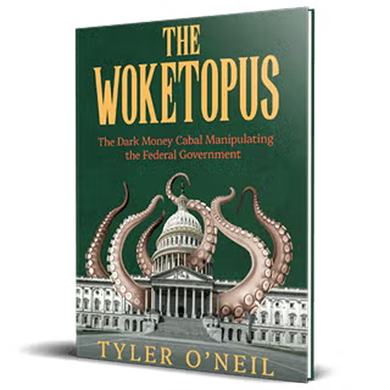
Read the first chapter of The Woketopus right now for FREE
Today, even with President Trump’s victory, leftist elites have their tentacles in every aspect of our government.
The Daily Signal’s own Tyler O’Neil exposes this leftist cabal in his new book, The Woketopus: The Dark Money Cabal Manipulating the Federal Government.
In this book, O’Neil reveals how the Left’s NGO apparatus pursues its woke agenda, maneuvering like an octopus by circumventing Congress and entrenching its interests in the federal government.
You can read the first chapter of this new book for FREE in this eBook, The Woketopus: Chapter One using the secure link below.



The Daily Signal depends on the support of readers like you.
RELATED ARTICLES




Don’t miss the

Don’t miss the signal