The growing number of cyber attacks in recent years has highlighted the risks that U.S. interests, critical infrastructure, and military operations face in cyberspace. Cyber threats, once relatively weak in nature compared to other military offenses, are now potential weapons of war, and considered hard-power tools of armed attack. Yesterday, The Heritage Foundation released the 2015 Index of U.S. Military Strength, whose discussion on cybersecurity is pertinent to understanding the threats the U.S. faces, and the challenges it has in protecting the nation and preventing cyber attacks that could devastate large parts of the country.
Since the 1970s, the realm of cyberspace has developed into an amazing amalgamation of constantly changing Internet-based technologies, with increasingly serious threats growing along the way. Today, the U.S. faces crucial challenges, including the cyber domain’s reach, speed, anonymity, and offense-dominated nature. This new element of warfare is unique in the way it benefits the U.S., and also poses a unique threat to U.S. military intelligence and operations.
The U.S. faces a variety of attacks that can cause serious damage to crucial U.S. infrastructure or military operations, including malware, malicious hardware, insider attacks, and targeted and advanced persistent threats (APTs). These and other types of cyber attacks could cause direct harm to U.S. platforms and personnel, or could weaken U.S. operations by hamstringing critical U.S. systems.
The U.S. and its allies face four threatening nations that can wield these and other cyber weapons: North Korea, Russia, Iran, and China. The Index of U.S. Military Strength addresses these states’ threats by analyzing each entity’s potential to pose a threat to a U.S. national interest, an overview of its capability and intent, and its history of attacks on the international community, as well as U.S.-based systems.
The Index details the risks that the U.S. faces in cyberspace, and it is crucial that U.S. cyber capabilities are able to meet the nature and seriousness of the threat. The U.S. benefits greatly from cyberspace, but it must also be prepared to wage war in cyberspace, protecting critical U.S. networks and striking aggressors. A failure to be adequately prepared in this realm undermines U.S. military strength and leaves the nation far more vulnerable than it should be.
Jennifer Guthrie is currently a member of the Young Leaders Program at The Heritage Foundation. For more information on interning at Heritage, please click here.
TRENDING ARTICLES



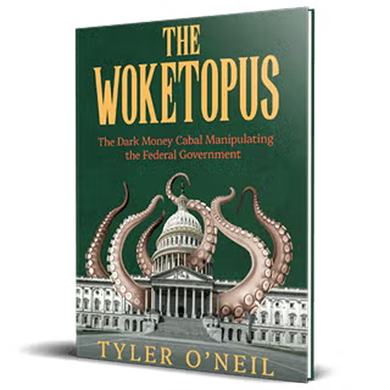
Read the first chapter of The Woketopus right now for FREE
Today, even with President Trump’s victory, leftist elites have their tentacles in every aspect of our government.
The Daily Signal’s own Tyler O’Neil exposes this leftist cabal in his new book, The Woketopus: The Dark Money Cabal Manipulating the Federal Government.
In this book, O’Neil reveals how the Left’s NGO apparatus pursues its woke agenda, maneuvering like an octopus by circumventing Congress and entrenching its interests in the federal government.
You can read the first chapter of this new book for FREE in this eBook, The Woketopus: Chapter One using the secure link below.
TRENDING ARTICLES


The Daily Signal depends on the support of readers like you.
RELATED ARTICLES





Don’t miss the

Don’t miss the signal