
Why Did President Trump Get an mRNA COVID-19 Shot?
David Gortler / Jay Richards /
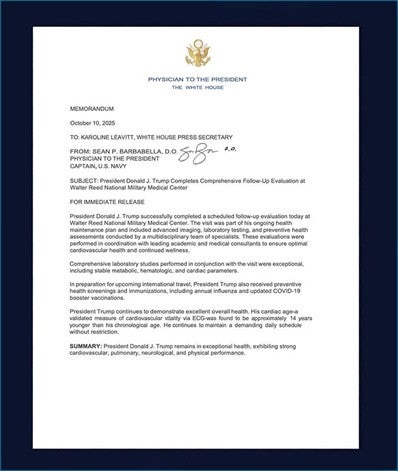
On Oct. 10, President Donald Trump’s physician, Dr. Sean P. Barbabella, announced that after conducting a battery of tests, he found that the president “remains in exceptional health” and that he had received “immunizations, including annual influenza and updated COVID 19 booster vaccinations.” It’s likely the president received one of the mRNA shots from Pfizer.
Trump—perhaps the busiest man on the planet—can’t be expected to do a deep dive on the epidemiology, safety, and efficacy of these shots. Like most patients, he had no choice but to trust the experts.
That policy makes sense when the experts are trustworthy and follow the evidence. Unfortunately, when it comes to public health, and to the COVID-19 mandates in particular, trust in public health agencies and health care professionals has been shattered beyond recognition.
So much of what people think they know about America’s drugs and approvals just isn’t so. As a result, we doubt the president of the United States received a full disclosure of the available data so he could weigh the risks versus the benefits of mRNA COVID-19 shots.
To exercise truly informed consent, he would have needed to know at least the following.
- It’s October 2025. Deadly variants of COVID-19 are long extinct and extremely unlikely to emerge without human engineering. (Of course, some people still die from COVID-19, just as some people die from the common cold. But we don’t view the common cold as a deadly disease.) This has been the case since the emergence of the Omicron variant in late 2021, according to a landmark meta-analysis published in the International Journal of Infectious Diseases.
- The president, according to his physician, “remains in exceptional health.”
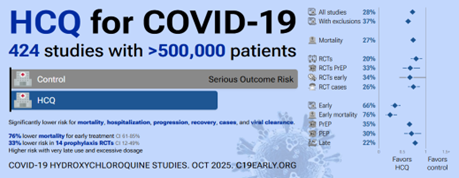
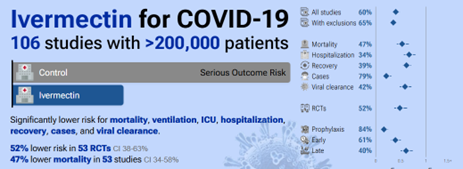
In layman’s terms, this means that if the president were to catch the flu or COVID-19 again (he has had COVID-19 at least once), it would be mild. He could easily treat it with very safe drugs such as ivermectin and the hydroxychloroquine that he correctly advocated, and stockpiled, along with dozens of other repurposed, inexpensive treatments for COVID-19 proven to be safe and effective as the peer-reviewed literature has clearly outlined:
- COVID-19 viruses mutate too quickly to be stopped by any mass-produced “vaccine.” Manufacturers knew from the start that with COVID-19’s high rate of mutation, mRNA shots would have to be produced and administered at least once a month, lest they become irrelevant due to mutations. Researchers from the universities of Bath and Edinburgh found that COVID-19 mutates as quickly as every two weeks. That means Trump’s monovalent injection developed in late 2024 and early 2025 could already have been outdated.
- Even if they were given as a monthly booster, these shots don’t do what a “vaccine” is supposed to do; they have not been shown to prevent the spread or transmission of COVID-19.
- There’s no reputable evidence to show that mRNA COVID-19 shots minimize serious disease and may have caused harm; by the end of 2022, the majority of COVID-19 deaths were in vaccinated/boosted individuals.
The Risks of mRNA COVID Shots
So much for the benefits. What about the risks?
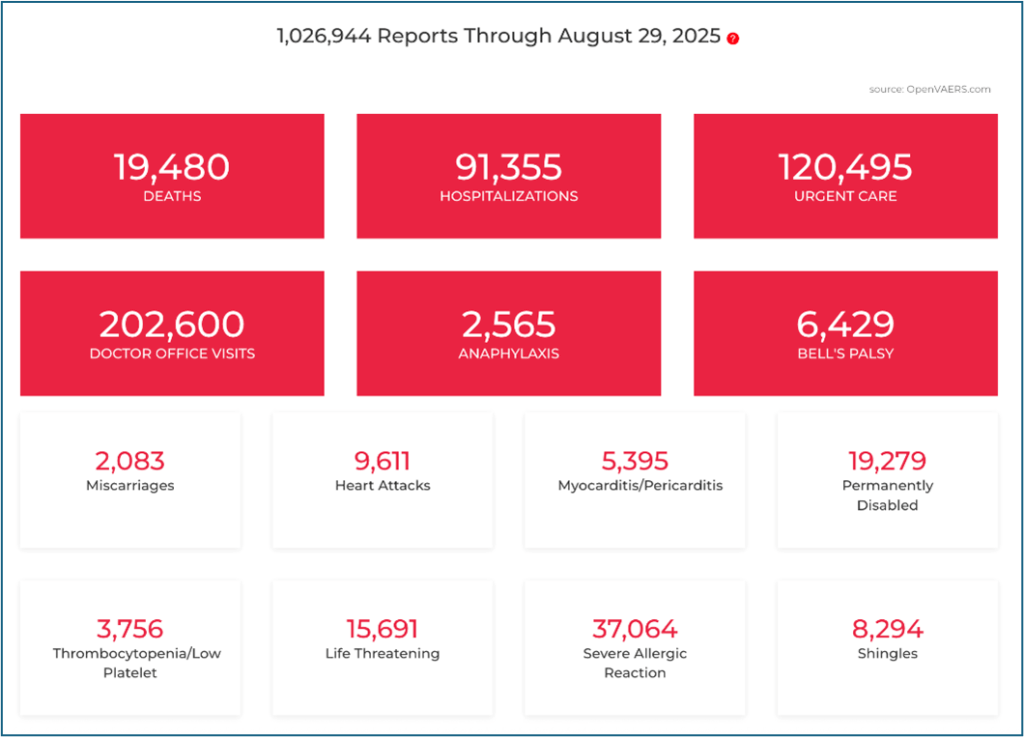
- In the FDA VAERS database, there are over one million adverse event reports from COVID-19 mRNA shots in the United States alone, which include tens of thousands of reports of deaths, permanent disability, ER visits, and severe allergic reactions. Even worse: The VAERS surveillance database only represents low, single-digit percentages of the actual number of adverse effects that actually occur.
- Pharma companies misled us in 2020-21 when they claimed the spike proteins produced by the mRNA shots stay confined in the injection site and last only a few days. The Infectious Disease Society of America states that the spike proteins generated by COVID-19 vaccines last “up to a few weeks” in the body. Other publications show evidence that the highly complex mRNA products and ingredients remain in the body for years, wreaking long-lasting havoc on health.
- Although ubiquitously labeled “vaccines,” the definition of “vaccine” had to be altered to accommodate the inclusion of mRNA injections. Prior to the definition change of vaccines, COVID-19 mRNA injections would have fallen under the definition of gene therapy.
- The fully synthetic lipid nanoparticles that accompany mRNA injections have not had their structures or exact doses disclosed. Although we know how much to inject (0.25 or 0.5mL), Americans still don’t know how many nucleotide strands or lipid nanoparticles are in that volume of liquid.
- In addition to the number of nucleotide strands in mRNA injections, the manufacturers have never shared the precise mRNA sequences or the lipid nanoparticle structures that must accompany the mRNA.
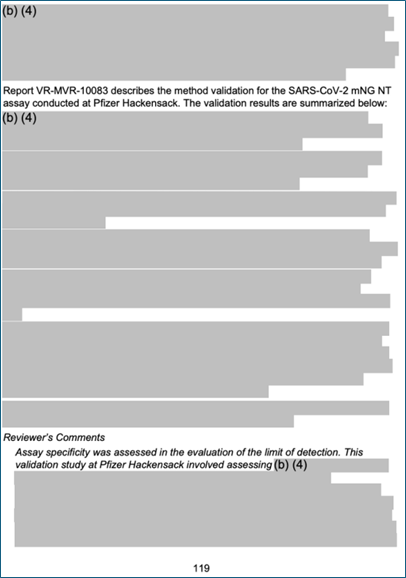
- Americans still do not have full transparency on COVID-19 mRNA shot ingredients. The FDA heavily redacted the manufacturer’s instructions on how to analyze the mRNA vaccines for quality control/assurance. Consider, for instance, a single redacted page in a longer FDA regulatory summary (shown below). This is part of a 127-page document on how to evaluate the purity, concentration, and other analytical measures of mRNA injections. Only 63 pages have been shared, and of those 63 pages, around 50% has been redacted.
- Furthermore, the FDA does not release the results of its quality control testing to verify the ingredients of the mRNA shots.
- DNA contamination has been reported with COVID-19 shots—contamination that could interfere with a healthy person’s ability to fight cancer.
- A population cohort study from August of 2025, which reported increased cancer risks following COVID-19 vaccination? In Italy, nearly 300,000 residents were tracked for 30 months, showing that mRNA shots boosted the risk of overall cancer, breast cancer, bladder cancer, and colorectal cancer.
- A confirmatory, second, larger study was published in late September 2025 out of Korea examined data from 2021-2023. It found that after correcting for age, sex, comorbidities, income level, and prior COVID-19 infection, COVID-19 vaccination was linked to serious increases in multiple major cancers (in line with reports of DNA contamination). This signal was consistent across all vaccine platforms and age groups and both sexes. It involved a cohort of 8.4 million adults and found increased risk of six major cancers: lung, prostate, thyroid, gastric, colorectal, and breast cancers.
- Another Oct. 5, 2025, paper shows a Stage IV bladder cancer patient who received a COVID-19 mRNA shot had a vaccine-derived spike gene sequence fused into the patient’s chromosome. The patient was a previously healthy 31-year-old woman who developed rapidly progressive stage IV bladder cancer within 12 months of completing a three-dose Moderna mRNA injection series. This suggests that mRNA injections can integrate into a patient’s DNA and cause devastating damage.
- A new analysis of Centers for Disease Control and Prevention data shows children born in the years following mass mRNA vaccination of mothers (including pregnant mothers) are dying at a 77% relatively higher rate. Again, this implies that the shots (contrary to advertising) can integrate and damage the recipient’s DNA. In other words, despite propaganda from the University of California, San Francisco and “famous” “Twitter doctors,” these shots don’t “stay in your arm,” are dangerous to a developing fetus, and can damage your DNA.
Long story short: The mRNA shots are far riskier and have far fewer net benefits than the public was led to believe. What’s more, both the FDA and the drug companies have chosen, over and over again, a policy opacity over transparency.
Of course, it’s impractical for a pharmacist or physician to read out every single side effect of every single drug, but COVID-19 mRNA shots are a special case.
Unlike every other product on the market, vaccine recipients can’t sue vaccine manufacturers in case of injury or death. Add to that the profound lack of transparency on some the most basic ingredients of these new and experimental drugs.
In light of these facts, providers have a duty to fully inform patients of risks and benefits. (In fact, the Omnibus Budget Reconciliation Act of 1990 and 1993 seem to require this.)
On Sept. 1, Trump said over Truth Social that he wants to know if drug companies are telling him the truth about the mRNA shots. We hope someone in the president’s circle will tell him.